RECOGNISE
Notice when normal has changed.
TSM CIVILIAN · PUBLIC PREPAREDNESS
Practical knowledge for ordinary people facing extraordinary situations.
Recognise what matters. Protect life. Help safely. Report clearly. Preserve what matters — until professionals take over.
Notice when normal has changed.
Create distance and safer options.
Give simple, safe help that matters.
Give responders useful information.
Life first. Then protect evidence and information.
THE CIVILIAN ROLE IN THE FIRST MINUTES
The goal is not to turn civilians into responders. It is to build enough judgement to avoid making a critical situation worse — and to help safely when it matters.
Recognise danger earlier and make proportionate decisions.
Prepare without frightening children; keep plans simple and usable.
Reduce confusion, support vulnerable people and pass useful information.
Help emergency services by protecting access, information and evidence.
PRACTICAL GUIDANCE
Short, evidence-based modules. Open any topic for practical guidance, the reasoning behind it and the international reference basis.
 VIOLENCE & ATTACKCover or concealment? Learn the difference before you need it.+
When deliberate violence begins, the first objective is to get away from the threat if a safe route exists. If escape is not possible, hiding should reduce both visibility and access.
CONCEALMENT hides you. COVER may protect you.
It may prevent the attacker seeing you, but it may offer little physical protection.
A substantial barrier may reduce exposure. Never assume any object is guaranteed ballistic protection.
Reference basis:Counter Terrorism Policing — RUN HIDE TELL · FBI — Active Shooter Quick Reference / Run Hide Fight
 FIRST LOOKA first look for immediate life threats — not formal triage.+
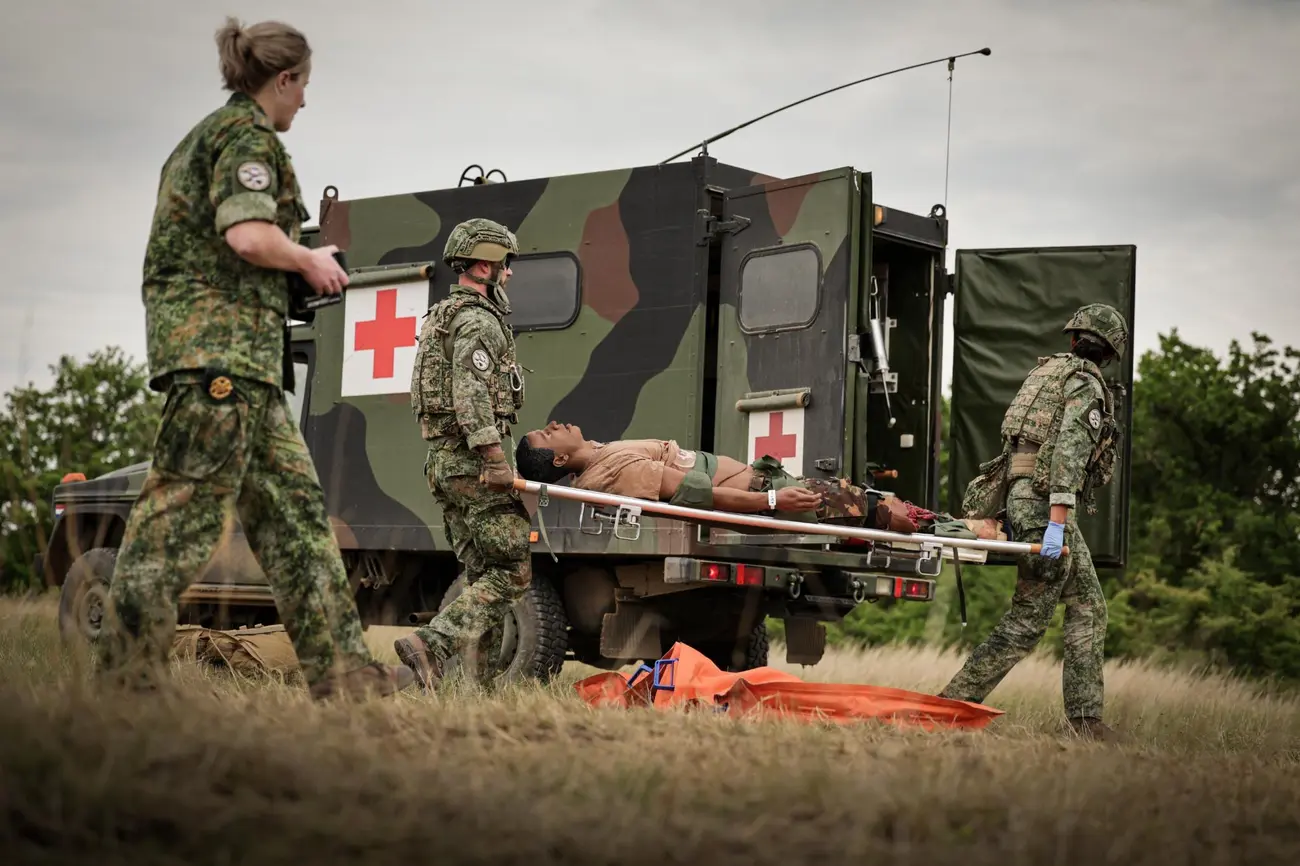
This is not formal triage. It is a simple first look: check that it is safe enough to approach, call 112, identify obvious life threats and give only the lifesaving help you can safely provide.
Reference basis:WHO — Community First Aid Response · WHO — Community First Aid Response Pocket Guide · European Commission — 112 emergency number
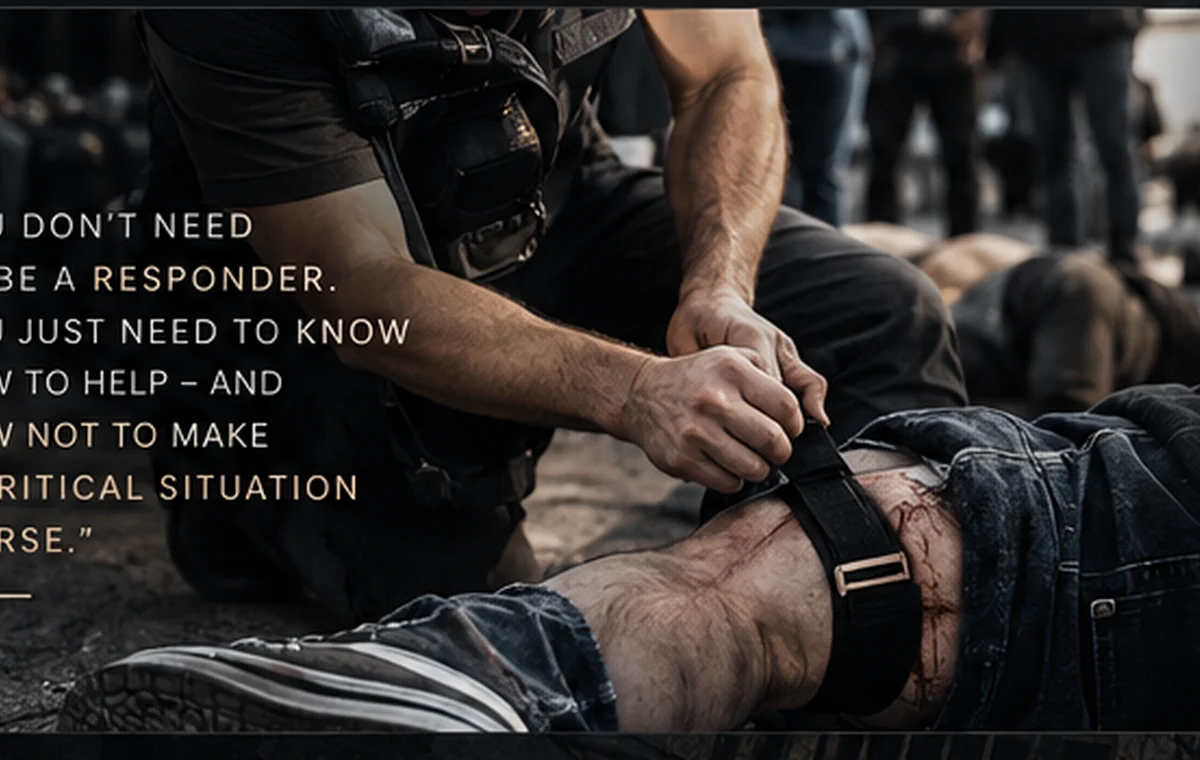 SEVERE BLEEDINGMinutes matter — start with firm, continuous direct pressure.+
Severe external bleeding can become life-threatening quickly. International first-aid guidance prioritises direct pressure and early access to emergency medical services.
Reference basis:IFRC — International First Aid, Resuscitation and Education Guidelines 2025 · American College of Surgeons — Stop the Bleed · WHO — Community First Aid Response Pocket Guide
 FIRE & SMOKESmoke changes the route. Your familiar exit may no longer be the safe exit.+
Fire escape depends on early movement, usable exits and avoiding smoke. A pre-planned second way out matters because conditions can change fast.
Reference basis:U.S. Fire Administration — Home Fire Escape Plans
 CROWD & CRUSHThe warning sign is not screaming. It is losing control of your own movement.+
Dangerous crowd conditions often develop through density, bottlenecks, surging and blocked routes. Recognising the change early is more useful than waiting for visible panic.
Reference basis:UK HSE — Crowd safety risk and crowd dynamics
 UNKNOWN SUBSTANCE / CBRNDistance before diagnosis. Do not investigate an unknown hazard yourself.+
An unusual smell, vapour, powder or contamination is not a cue to identify the substance. The first civilian priority is to reduce exposure and follow official instructions.
Reference basis:CDC — What to Do in a Chemical Emergency
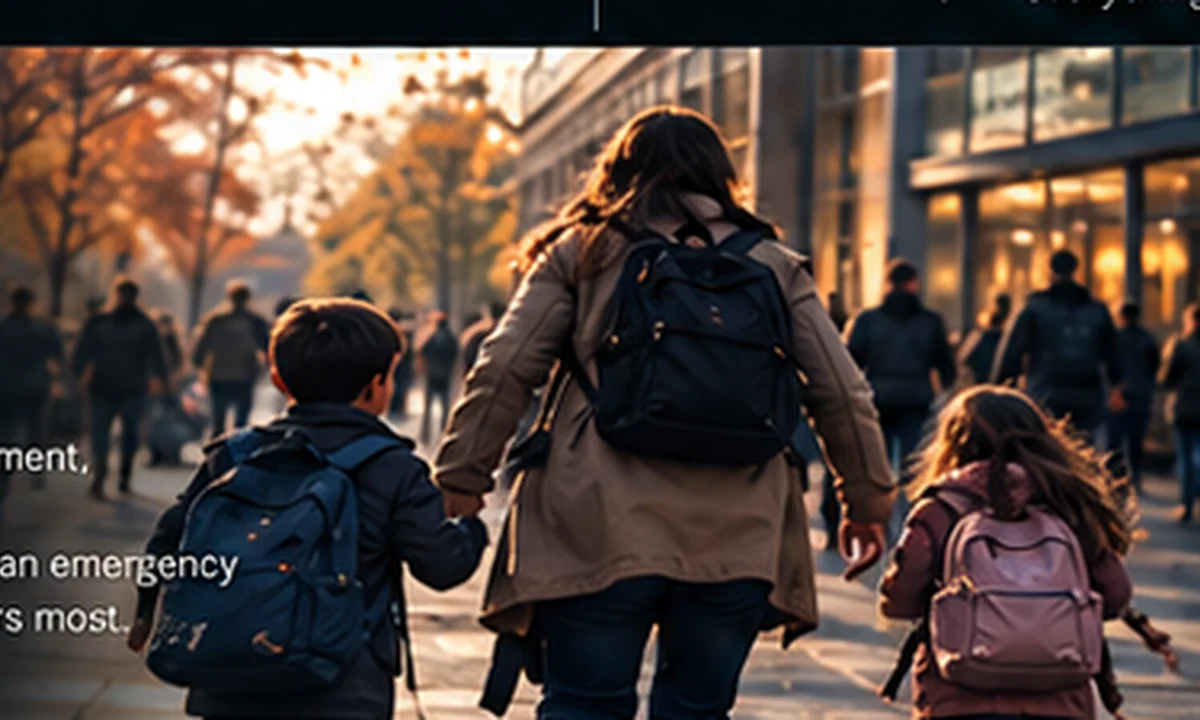 CHILDREN & FAMILYChildren change mobility, communication, time and priorities.+
Children do not need frightening detail. They need adults who have made a few decisions in advance and can give clear, age-appropriate instructions under stress.
Reference basis:Counter Terrorism Policing — RUN HIDE TELL
 REPORT WHAT MATTERSMake your call useful: WHAT · WHERE · DANGER · PEOPLE · ACCESS.+
Emergency operators need a usable picture, not a perfect story. Give the most important facts first and stay available for questions.
Reference basis:Counter Terrorism Policing — RUN HIDE TELL · European Commission — 112 emergency number
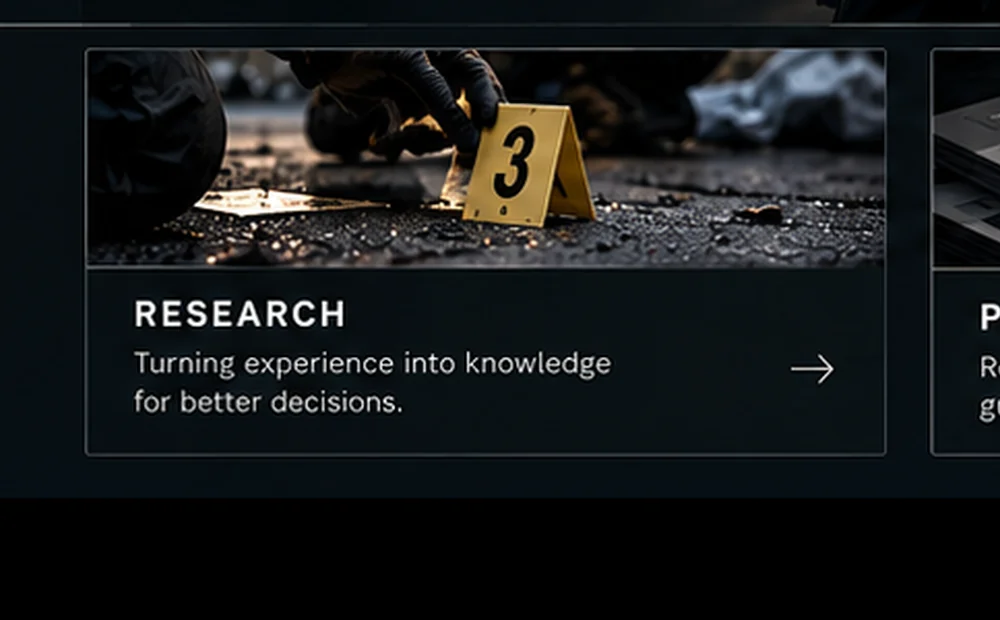 PRESERVE WHAT MATTERSLife first. Evidence second. But evidence still matters.+
Saving life always overrides scene preservation. Once people are safe, avoid unnecessary changes that can destroy, move or contaminate material important to an investigation.
Reference basis:ENFSI — Best Practice Manual for the Scene of Crime Examination · NIST — Digital Evidence Preservation: Considerations for Evidence Handlers
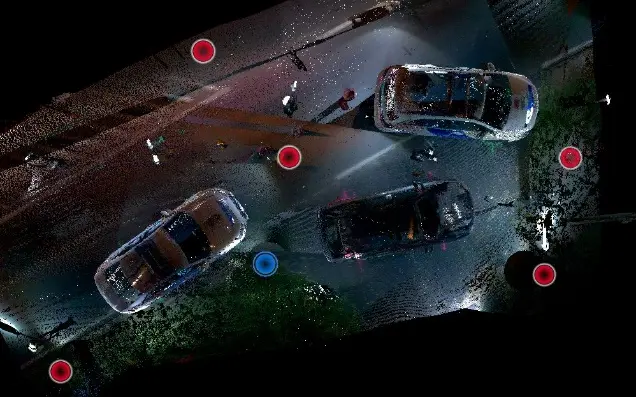 RECORD WHAT YOU WITNESSEDWrite down what you personally saw and heard before later discussion or online content can influence your account.+
Conversations, social media and later information can influence a witness’s recollection. Record your own first-hand account before you are exposed to other versions.
Reference basis:College of Policing — Advice on information exposure for witnesses · College of Policing — Allowing uncertainty in witness accounts
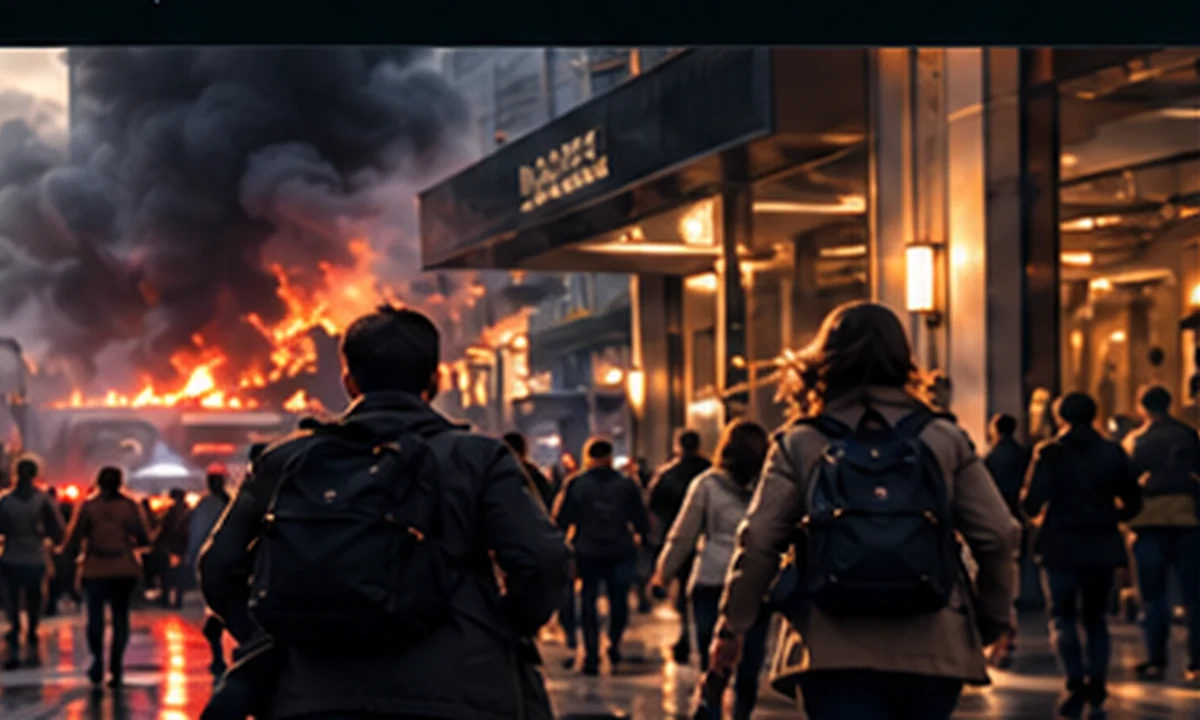 AFTER THE INCIDENTThe danger may be over. Your role may not be.+
After a major incident, authorities may need witnesses, original digital material, accurate family information and space to work. Recovery also means protecting yourself from unnecessary exposure.
Reference basis:College of Policing — Advice on information exposure for witnesses · European Commission — 112 emergency number
TSM Civilian
“You do not need to become a responder. You need to know what helps — and what can make things worse.”
TSM Civilian translates selected principles from emergency care, counter-terrorism guidance, crowd safety and forensic scene management into practical public knowledge. It deliberately stops short of specialist tactics and formal professional certification.
DEVELOPING TSM INITIATIVE
The civilian strand is being developed as a research-informed public preparedness initiative. Future formats may include scenario-based learning, practical workshops and assessed modules, subject to appropriate medical, legal and professional validation.
TSM Civilian provides general preparedness information. It is not an emergency service, medical diagnosis, formal triage qualification, or a substitute for locally approved first-aid or emergency-response training. In an emergency, follow local authorities and emergency operators. Never remain in or re-enter a dangerous area to preserve evidence.
Return to TSM →