Recognition and risk assessment
Identify process indicators, immediate chemical hazards and the information needed before entry.
Clandestine drug laboratories · Synthetic-drug scenes
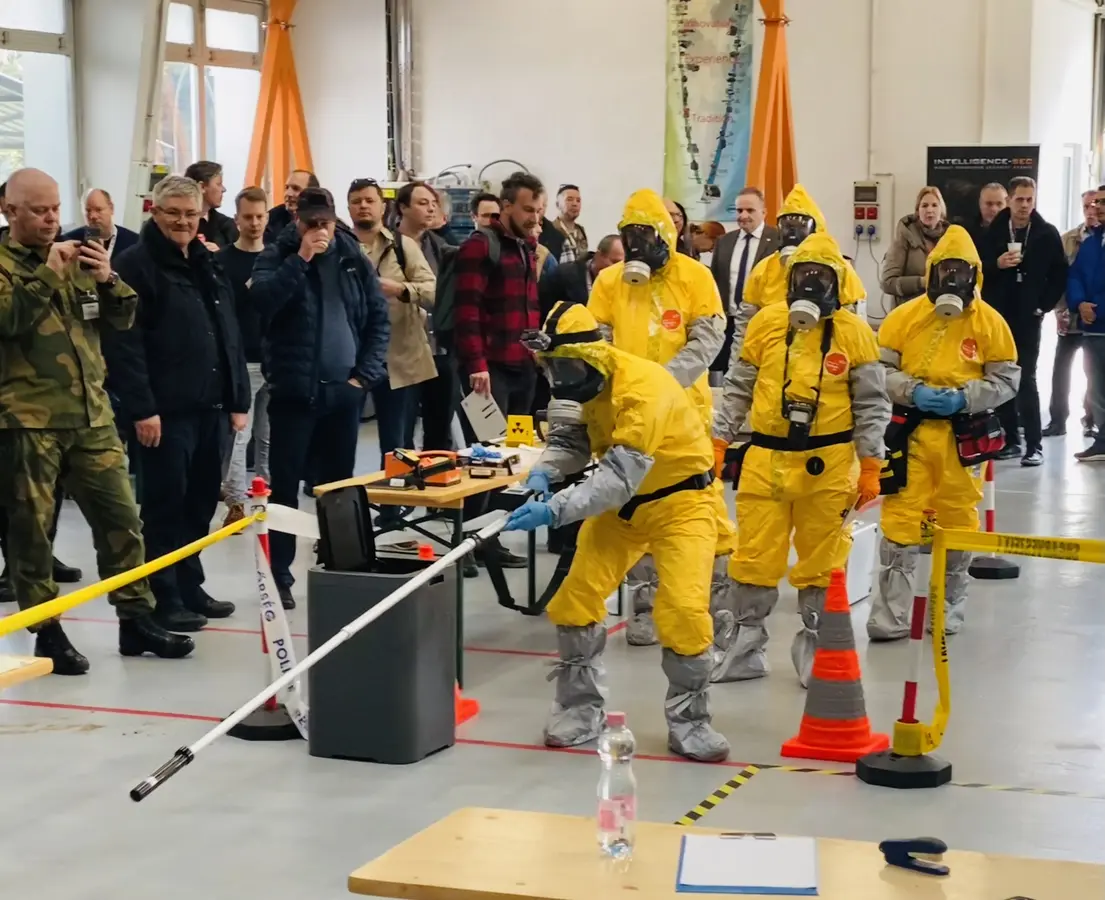
Illicit laboratory response requires chemical-risk control, investigative strategy, production-process documentation, sampling, hazardous-waste coordination and evidential continuity.
A clandestine drug laboratory is both an illegal production site and a potentially unstable chemical environment. Safe investigation requires recognition of processes and precursors, risk-led entry, scene control, forensic documentation, representative sampling, dismantling coordination and management of chemicals, waste and contaminated evidence.
Ventilation, movement, neutralisation and dismantling may alter or destroy evidence of the production method, capacity and network. Police, chemists, HazMat personnel, forensic specialists, waste contractors and prosecutors therefore need a shared plan before the scene is changed.
Applied knowledge
Each area can be examined separately; operational value emerges when its interfaces with the wider system are understood.
Identify process indicators, immediate chemical hazards and the information needed before entry.
Document layout, equipment, chemicals, intermediate products and sequence before dismantling.
Plan representative samples, controls, packaging, labelling and analytical questions.
Integrate forensic priorities with HazMat, transport, waste and environmental requirements.
Practitioner-led across the chain
TSM is not assembled from conference summaries or secondary material alone. Its founder’s experience spans criminal investigation, major-scene leadership, forensic recovery, CBRN and radiological scene management, DVI coordination, illicit laboratory response, technology integration, international instruction and exercise evaluation.
That breadth makes it possible to examine not only what each specialist function does, but what its decisions change for every function that acts before, beside or after it.
Operational relevance
Relevant communities
Research and learning formats
This field note links research, professional guidance and operational practice. The public references support its terminology and context; they do not imply institutional endorsement of TSM.
Scientific dialogue
TSM welcomes research cooperation, peer review, editorial collaboration, academic or conference invitations and professional knowledge exchange, within clear authority and conflict-of-interest boundaries.