UAV imaging and mapping
Plan lawful, safe and repeatable aerial documentation for orientation, mapping and reconstruction.
Forensic technology integration · Method before equipment
Technology creates value only when acquisition, validation limits, operator competence, data integrity, interpretation and intended evidential use are planned together.
Forensic technology integration is the controlled introduction of sensing, imaging, analytical and data tools into an existing investigative workflow. It begins with the operational question and defines what the method can detect, how results are documented, what limitations apply and whether the output supports orientation, intelligence, reconstruction or formal evidence.
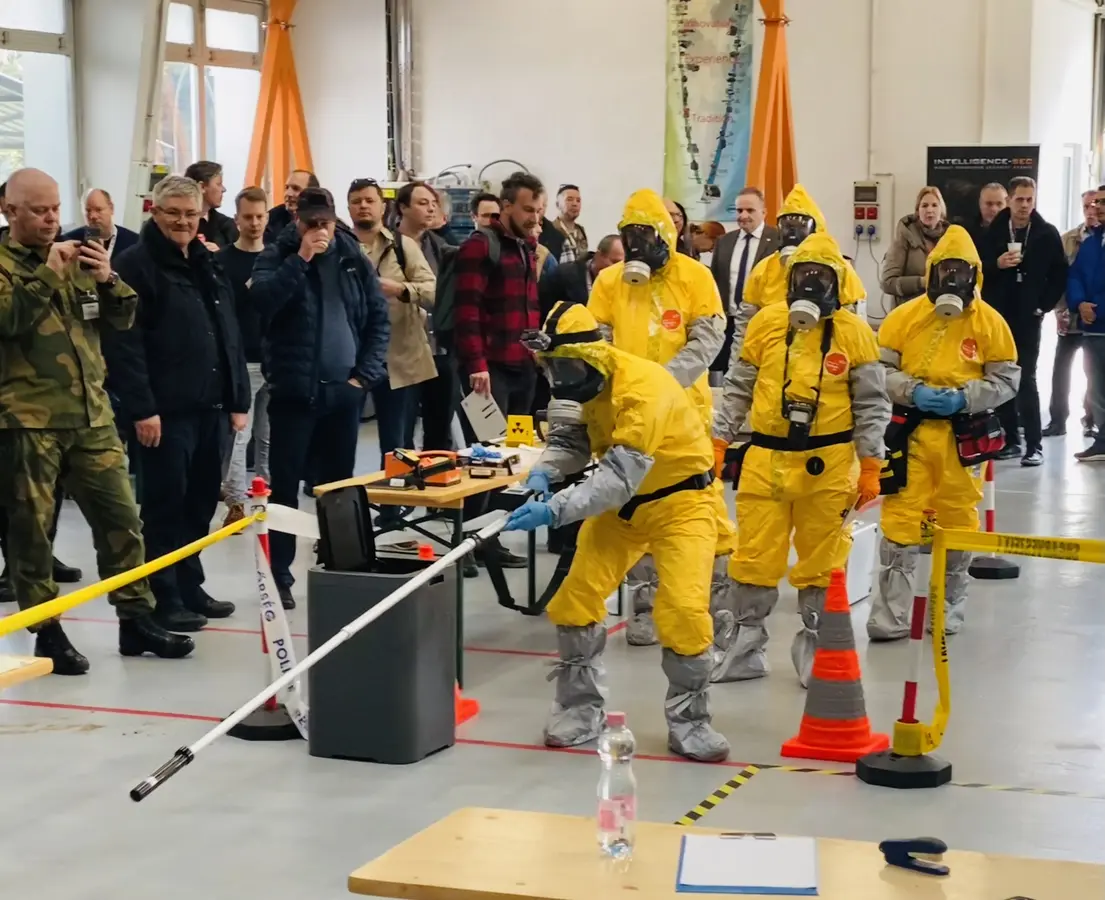
UAVs, 3D scanners, radar systems, Raman instruments and Rapid DNA platforms produce different types of information with different validation, environmental and interpretation limits. TSM connects the technology to scene strategy, quality assurance, data continuity and the decision it is expected to improve.
Applied knowledge
Each area can be examined separately; operational value emerges when its interfaces with the wider system are understood.
Plan lawful, safe and repeatable aerial documentation for orientation, mapping and reconstruction.
Capture spatial relationships with defined registration, accuracy, storage and reporting requirements.
Use screening information with explicit spectral, sampling, contamination and confirmation limits.
Integrate specialised detection and rapid-analysis outputs without overstating certainty or bypassing validation.
Practitioner-led across the chain
TSM is not assembled from conference summaries or secondary material alone. Its founder’s experience spans criminal investigation, major-scene leadership, forensic recovery, CBRN and radiological scene management, DVI coordination, illicit laboratory response, technology integration, international instruction and exercise evaluation.
That breadth makes it possible to examine not only what each specialist function does, but what its decisions change for every function that acts before, beside or after it.
Operational relevance
Relevant communities
Research and learning formats
This field note links research, professional guidance and operational practice. The public references support its terminology and context; they do not imply institutional endorsement of TSM.
Scientific dialogue
TSM welcomes research cooperation, peer review, editorial collaboration, academic or conference invitations and professional knowledge exchange, within clear authority and conflict-of-interest boundaries.