Radiation-aware command
Connect incident command, radiological assessment, security and investigative priorities.
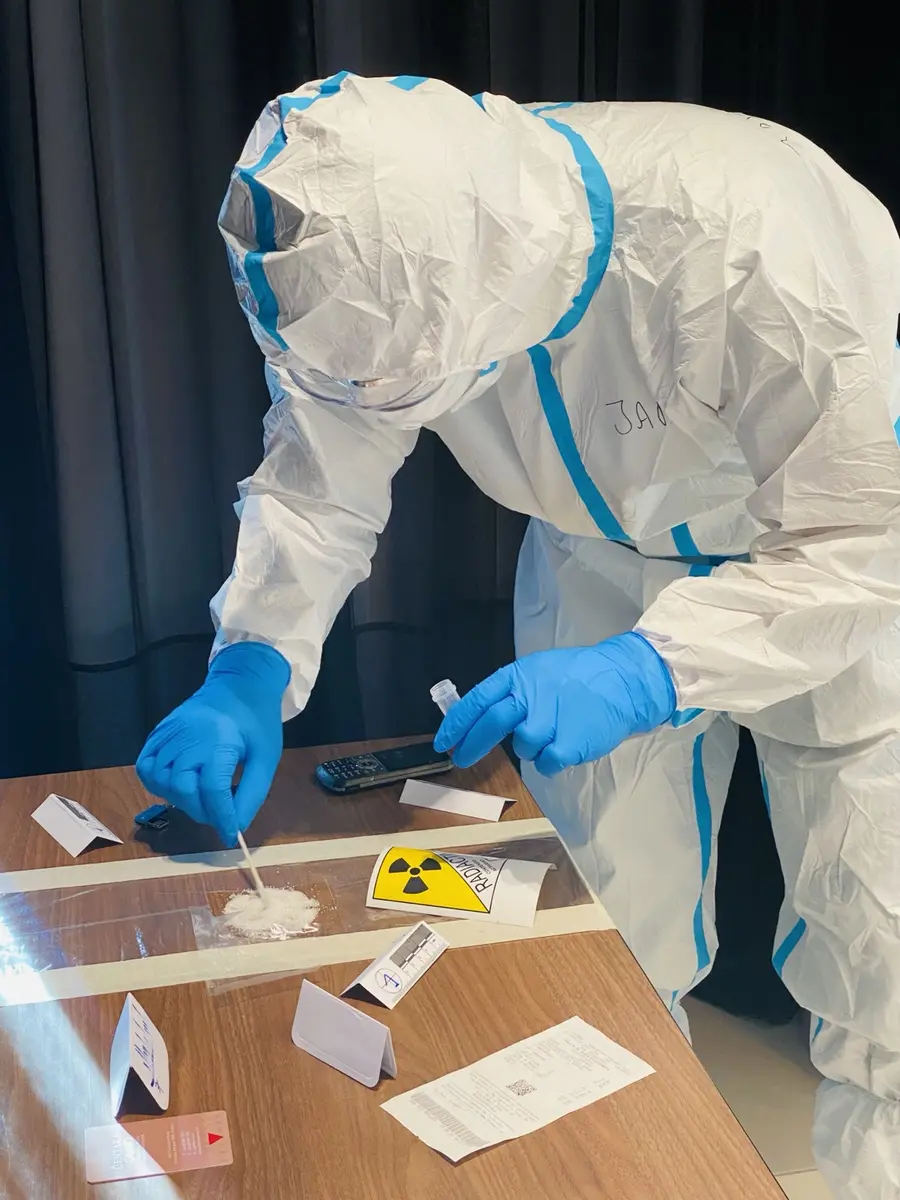
RCSM · Radiological Crime Scene Management
RCSM integrates law enforcement, radiation protection, measurement, forensic recovery, nuclear forensics and judicial requirements at scenes involving radioactive material.
The IAEA describes Radiological Crime Scene Management as the process used to ensure safe, secure, effective and efficient operations where nuclear or other radioactive material is known or suspected to be present. In practice, it connects radiation protection and measurement with scene control, forensic documentation, prioritised recovery, packaging, transport and nuclear-forensic or laboratory interfaces.
The most accessible object is not always the most informative, and the most informative object may carry the greatest radiological or contamination burden. Decisions require shared thresholds, competent measurement, clear authority and an auditable explanation of why an item was recovered, deferred or left in place.
Applied knowledge
Each area can be examined separately; operational value emerges when its interfaces with the wider system are understood.
Connect incident command, radiological assessment, security and investigative priorities.
Use instrument information to support zoning, access, search sequencing and recovery decisions.
Balance dose, contamination, perishability, intelligence potential and evidential value.
Preserve context, continuity and analytical questions through packaging, transport and laboratory handover.
Practitioner-led across the chain
TSM is not assembled from conference summaries or secondary material alone. Its founder’s experience spans criminal investigation, major-scene leadership, forensic recovery, CBRN and radiological scene management, DVI coordination, illicit laboratory response, technology integration, international instruction and exercise evaluation.
That breadth makes it possible to examine not only what each specialist function does, but what its decisions change for every function that acts before, beside or after it.
Operational relevance
Relevant communities
Research and learning formats
This field note links research, professional guidance and operational practice. The public references support its terminology and context; they do not imply institutional endorsement of TSM.
Scientific dialogue
TSM welcomes research cooperation, peer review, editorial collaboration, academic or conference invitations and professional knowledge exchange, within clear authority and conflict-of-interest boundaries.