Shared command picture
Map mandates, hazards, operational sectors, decision rights and information requirements across participating organisations.
Terror Scene Management · Integrated operating model
TSM aligns rescue, threat control, CBRN safety, casualty and fatality management, forensic recovery, intelligence exploitation and the justice process around one shared operational picture.
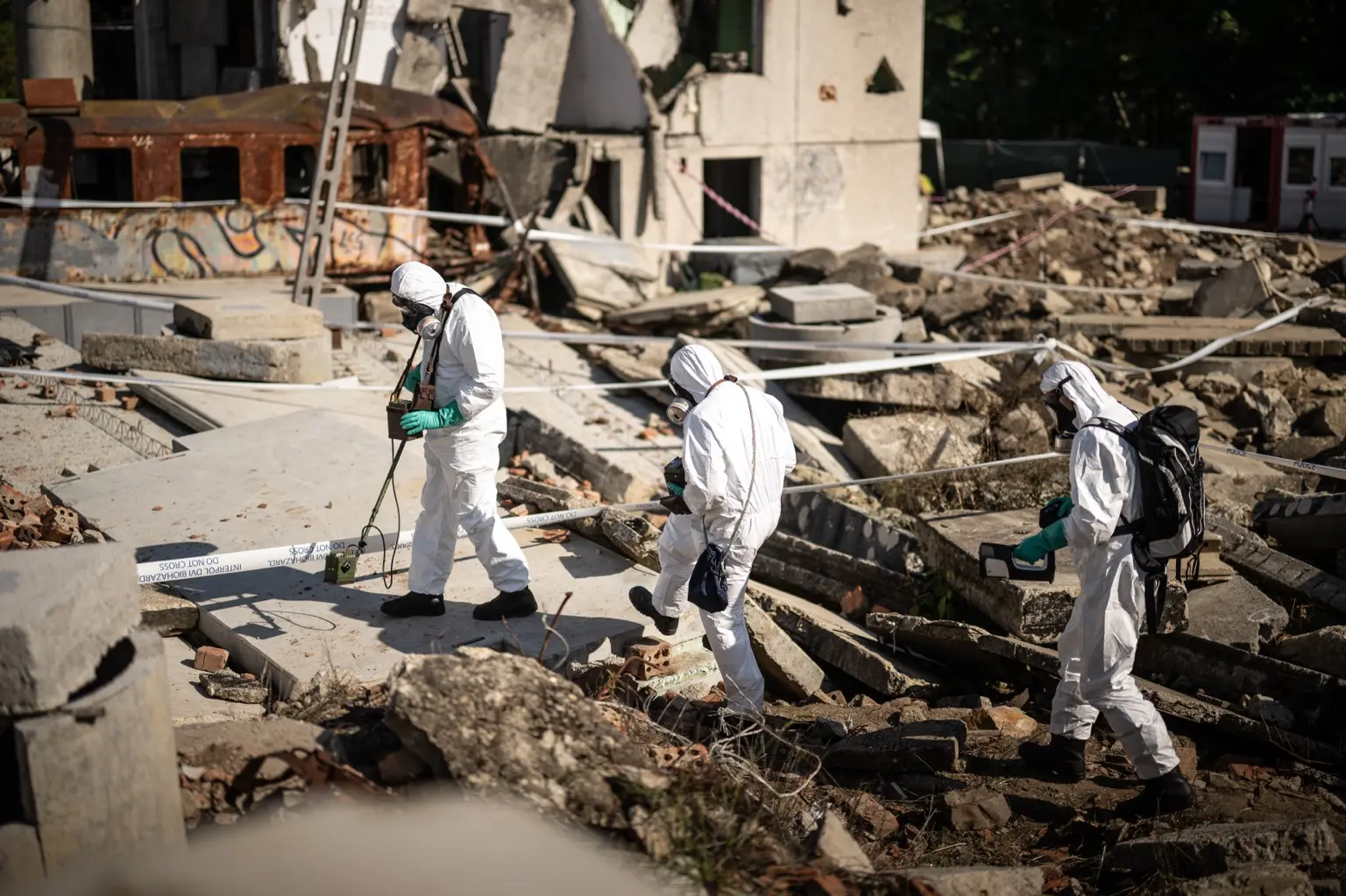
Terror Scene Management is a practitioner-led framework for coordinating the organisational and evidential interfaces at terrorist, CBRN and mass-casualty scenes. Its purpose is controlled parallel action: protect life and responders, prioritise time-critical evidence and route early findings to investigators and partner authorities while complete scene processing continues.
A medical, tactical, CBRN, forensic or DVI team can follow its own procedure correctly while the combined mission still loses time, evidence or decision traceability. TSM makes dependencies, authority, handovers, information flows and evidence priorities explicit, then tests them under realistic pressure.
Applied knowledge
Each area can be examined separately; operational value emerges when its interfaces with the wider system are understood.
Map mandates, hazards, operational sectors, decision rights and information requirements across participating organisations.
Sequence only what safety requires; run rescue, threat control, intelligence and priority forensic work concurrently where risk permits.
Order recovery by perishability, threat relevance, intelligence potential, contamination risk and later evidential value.
Preserve decision records, chain of custody, laboratory interfaces and the route from urgent lead to admissible evidence.
Practitioner-led across the chain
TSM is not assembled from conference summaries or secondary material alone. Its founder’s experience spans criminal investigation, major-scene leadership, forensic recovery, CBRN and radiological scene management, DVI coordination, illicit laboratory response, technology integration, international instruction and exercise evaluation.
That breadth makes it possible to examine not only what each specialist function does, but what its decisions change for every function that acts before, beside or after it.
Operational relevance
Relevant communities
Research and learning formats
This field note links research, professional guidance and operational practice. The public references support its terminology and context; they do not imply institutional endorsement of TSM.
Scientific dialogue
TSM welcomes research cooperation, peer review, editorial collaboration, academic or conference invitations and professional knowledge exchange, within clear authority and conflict-of-interest boundaries.