Needs and gap analysis
Define the operational problem, participating mandates and observable performance objectives.
Exercises · Evaluation · Instructor development
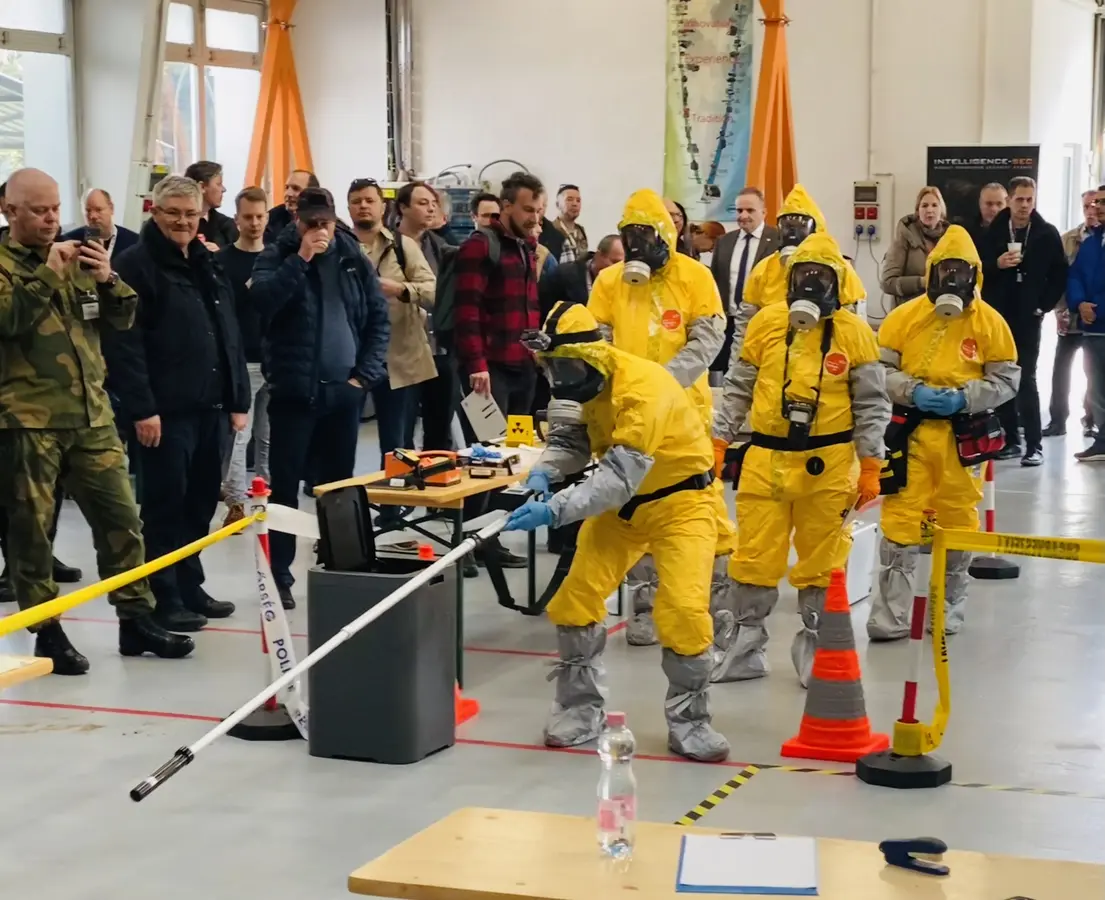
TSM exercises are designed around decisions, dependencies and handovers—not spectacle. They reveal whether command, safety, forensic, DVI, intelligence and justice functions can perform as one system.
A TSM exercise tests how organisations recognise a complex incident, establish authority, share information, manage hazards, prioritise evidence and transfer time-critical findings while rescue, investigation and victim-management activity continue. Evaluation focuses on observable decisions and system interfaces rather than participant satisfaction alone.
Smoke, casualties and equipment create immersion, but capability improves only when objectives, injects, observations and evaluation criteria are linked. TSM designs complexity in controlled layers so that weaknesses can be attributed, discussed and retested.
Applied knowledge
Each area can be examined separately; operational value emerges when its interfaces with the wider system are understood.
Define the operational problem, participating mandates and observable performance objectives.
Build from tabletop and technical stations to command-post or field activity only where useful.
Record decisions, timings, handovers, information gaps and evidence consequences against agreed criteria.
Convert findings into actions, revised procedures, refresher activity and Train-the-Trainer capability.
Practitioner-led across the chain
TSM is not assembled from conference summaries or secondary material alone. Its founder’s experience spans criminal investigation, major-scene leadership, forensic recovery, CBRN and radiological scene management, DVI coordination, illicit laboratory response, technology integration, international instruction and exercise evaluation.
That breadth makes it possible to examine not only what each specialist function does, but what its decisions change for every function that acts before, beside or after it.
Operational relevance
Relevant communities
Research and learning formats
This field note links research, professional guidance and operational practice. The public references support its terminology and context; they do not imply institutional endorsement of TSM.
Scientific dialogue
TSM welcomes research cooperation, peer review, editorial collaboration, academic or conference invitations and professional knowledge exchange, within clear authority and conflict-of-interest boundaries.